Stuck Between Respect and Results: How to Handle a Mentor Who Teaches Like It's 1987
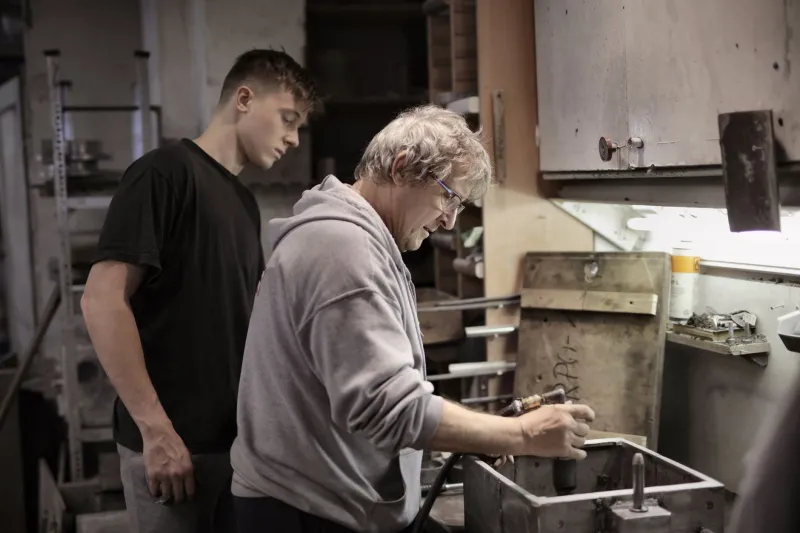
There's a moment almost every apprentice knows. You're standing on a jobsite, you've just watched your journeyman do something the same way for the fifth time — a way that feels slow, confusing, or just plain off — and you think: Is this really how it's supposed to go?
You don't say anything, of course. Because he's been doing this for 30 years. Because you're the new guy. Because the unwritten rule in most trades is that you watch, you listen, and you do it the way you're told until someone decides you've earned the right to have an opinion.
But here's the problem: that silence has a cost.
The Respect Trap
Trade culture runs deep on hierarchy, and for good reason. The whole point of an apprenticeship is that you're learning from someone who's already made the mistakes you haven't made yet. That earned respect isn't just tradition — it's practical. A journeyman electrician who's been on the tools since before you were born has forgotten more about wire management than most people will ever know.
But respect and blind obedience aren't the same thing. And when apprentices confuse the two, the learning actually breaks down.
Some mentors teach the way they were taught — not because it's the most effective method, but because it's the only method they know. Others have genuinely useful instincts but terrible communication skills. A few are just checked out, going through the motions until retirement. None of that means you're stuck.
The challenge is figuring out when you're resisting something valuable versus when you're genuinely not getting what you need.
When to Trust the Process (Even When It's Frustrating)
Let's be honest: a lot of the time, the "old way" is worth sitting with. Trades have built-in wisdom that doesn't always look like wisdom from the outside. Repetitive tasks that feel pointless often build muscle memory that pays off six months later. Methods that seem inefficient sometimes account for safety variables you haven't learned to spot yet.
If your discomfort is mostly about pace — if you feel like you're not moving fast enough, or you want to skip ahead to the "interesting" stuff — that's usually a signal to slow down and trust where you are. Every trade has a foundation phase, and rushing it tends to create gaps that show up later at the worst possible time.
Also worth asking yourself: have you actually tried it the way your mentor showed you, more than once, with real effort? Not just going through the motions while mentally drafting your complaint. There's a difference between a method that doesn't work and a method you haven't fully committed to yet.
When It's Time to Speak Up
That said, not every "this is how we do it" deserves your silence.
If a teaching method is leaving you genuinely confused — not just challenged, but actually lost — that's a real problem. An apprenticeship that doesn't produce learning isn't doing its job. Same goes if you're consistently being asked to watch rather than do, or if your questions are getting brushed off without any real engagement.
Safety is its own category entirely. If something feels wrong from a safety standpoint, you don't wait for the right moment to bring it up. That's non-negotiable, full stop.
For everything else, the key is how you raise the issue. Coming at your mentor with "that method is outdated" is a fast track to a bad working relationship. Coming at them with genuine curiosity — "Hey, I'm trying to understand the reasoning here, can you walk me through why we approach it this way?" — opens a door instead of closing one.
Most experienced tradespeople respond well to curiosity. They've put decades into their craft. Give them a chance to explain it, and you might actually learn something you didn't expect.
Finding Allies Without Creating Drama
Sometimes the gap between you and your mentor is just too wide to bridge on your own. Maybe communication styles are totally mismatched. Maybe there's a genuine personality conflict. Maybe the training structure itself is broken.
This is where having other relationships on the jobsite matters.
Look for second- or third-year apprentices who've been where you are. They're close enough to your experience to understand it, but far enough along to have perspective. A lot of them will have navigated exactly this kind of friction and can tell you what worked and what blew up in their face.
Your apprenticeship coordinator or program director is also a real resource — one that a lot of apprentices underuse because they're worried it'll look like complaining. But that's literally part of their job. They're not there just to process your paperwork. If your training isn't working, they need to know, and a good coordinator can often find solutions that don't involve blowing up your relationship with your mentor.
Union stewards, where applicable, can also play this role. The structure exists for a reason.
The Generational Gap Is Real — And It Goes Both Ways
Here's something worth sitting with: the friction between newer apprentices and experienced journeymen isn't just about teaching methods. It's about two genuinely different sets of assumptions about how learning works.
Older tradespeople were often trained in environments where asking questions was seen as weakness, where you figured things out by watching and doing and occasionally failing hard. That produced a lot of excellent tradespeople — but it also produced a lot of people who struggle to articulate what they know because they never had to.
Younger apprentices often come in expecting more explanation, more context, more feedback. That's not entitlement — it's just a different learning culture. And honestly, it's not wrong to want to understand why something works, not just that it works.
The best outcomes happen when both sides stretch a little. When the journeyman makes an effort to explain the reasoning, and when the apprentice makes an effort to earn that explanation by demonstrating they're genuinely engaged.
What This Actually Looks Like in Practice
Maybe you try the method as shown, then ask a specific question about one part of it that didn't click. Maybe you wait until the end of the day — not in the middle of a task — to bring up something that confused you. Maybe you find a moment when your mentor is in a good mood and you just say, "I want to make sure I'm learning this the right way — can I ask you something?"
Small moves. Consistent effort. Genuine respect that doesn't require you to pretend everything is working when it isn't.
The trades have always been about passing knowledge from one generation to the next. That transfer isn't automatic — it takes real communication on both sides. You're not just building skills out there. You're learning how to work with people, advocate for yourself, and navigate relationships that don't always come with clear instructions.
That part of the training? Nobody puts it in the curriculum. But it might be the most valuable thing you walk away with.