Month by Month: The Brutally Honest Truth About Your First Year as an Apprentice
The brochure makes it look clean. You shake some hands, sign some paperwork, strap on a tool belt, and start earning while you learn. And sure — that's technically accurate. But between the pitch and the paycheck, there's a whole year of experiences that nobody really prepares you for.
Year one of an apprenticeship is exciting, humbling, occasionally frustrating, and — if you let it — genuinely transformative. The people who come out the other side stronger aren't necessarily the most talented. They're the ones who knew what was coming.
So let's talk about what's actually coming.
Months 1–2: The Fog of Knowing Nothing
Most new apprentices walk into their first week expecting to feel useful. Instead, they feel like they've shown up to a party where everyone else speaks a different language.
"I thought I'd at least be doing something by day three," says Marcus T., an electrical apprentice out of Columbus, Ohio. "Instead I spent the first two weeks handing tools to guys and trying to remember what a conduit bender even was."
That's normal. Almost universal, actually. The early weeks are about orientation — learning the rhythm of a jobsite, the unwritten rules, the hierarchy, and the vocabulary. You're absorbing more than you realize, even when it doesn't feel like it.
Expect to feel slow. Expect to ask questions that seem embarrassingly basic. Expect your journeyman to repeat himself more than once. This isn't failure — it's the foundation being poured.
Common setbacks in this phase include showing up with the wrong gear, not knowing when to speak up and when to stay quiet, and misjudging how physically demanding the work actually is. Sore muscles and bruised confidence tend to travel together in those first few weeks.
Months 3–4: The Grind Starts to Feel Real
By month three, the novelty has worn off. You know where the coffee is, you've stopped getting lost on the way to the supply room, and you've maybe — maybe — been trusted with a small task on your own.
This is also when a lot of people quietly consider quitting.
It's not dramatic. There's no blowup moment. It's more like a slow realization that this is harder and slower than you expected, and the gap between where you are and where you want to be feels enormous. The classroom component of your apprenticeship program kicks into higher gear around this time, and balancing evening coursework with full days of physical labor is a real adjustment.
"Month four was rough," admits Priya S., a plumbing apprentice in the Dallas-Fort Worth area. "I was exhausted all the time, my instructor was covering pipe sizing calculations, and I still felt like I was the least useful person on every crew I joined. I almost convinced myself I'd made a mistake."
She didn't quit. But she says what kept her going was a mentor who told her something simple: "Everyone feels this way. The ones who stay are the ones who decide to."
Decision-making is a big part of year one — not the kind you do on a blueprint, but the internal kind.
Months 5–7: The Click Moment
Somewhere in the middle of year one, something shifts. It's not a single moment for most people — it's more like a gradual accumulation of small wins that suddenly feel significant.
You finish a task without being asked twice. You troubleshoot a minor problem on your own. You use a term correctly in context and a veteran nods in approval. These things sound small, but they land differently when you've been grinding for months.
This is also when the classroom material starts connecting to the jobsite in real ways. The theory you were memorizing begins to explain the physical work you've been doing, and vice versa. That integration — hands meeting head — is one of the most satisfying parts of trade training, and it tends to hit hardest around the halfway point of year one.
Your pay may also tick up slightly if your program has tiered wage increases tied to hours or performance benchmarks. That's a psychological boost as much as a financial one.
Months 8–10: Confidence Without Cockiness
By the back half of year one, most apprentices have found their footing. You've developed preferences — tools you like, methods that click for you, mentors whose styles resonate. You're no longer just surviving the day; you're starting to think about what you're building.
This phase comes with a new risk: overconfidence. It's easy to mistake "I know more than I did" with "I know enough." Journeymen and foremen are good at spotting this, and it doesn't always go over well.
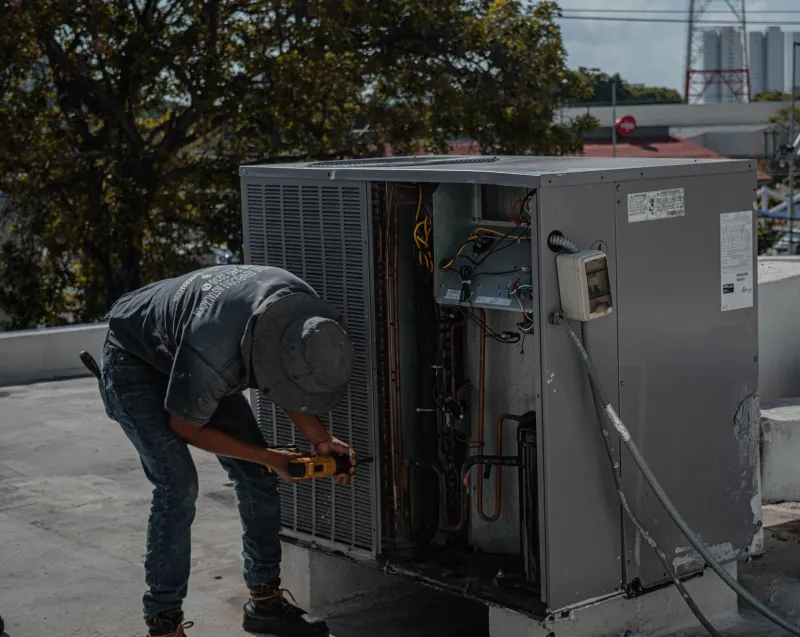
"I started getting a little too comfortable around month nine," laughs Derek W., an HVAC apprentice from the Chicago suburbs. "My lead pulled me aside and said, 'You're good, but you're not finished. Don't get ahead of yourself.' It was exactly what I needed to hear."
The best apprentices in this phase are the ones who channel their growing confidence into curiosity — asking better questions, taking on harder tasks, and staying coachable even when it's tempting to coast.
Months 11–12: The Person You've Become
By the time you're approaching the end of year one, something has changed that has nothing to do with tools or techniques. You think differently.
You problem-solve in layers. You read a space or a system and start seeing what needs to happen before you're told. You manage your time better because you've learned what it costs to waste it. You show up differently — not just physically, but mentally.
There's also a quiet pride that builds. It's not the kind you talk about at dinner parties. It's the kind you feel when you look at something you helped build and know exactly what went into making it work.
"I drove past a building we wired and just sat there for a second," says Marcus. "Like, I did that. My hands did that. That's not nothing."
It's really not nothing.
What Separates the Ones Who Stay
Across the board, apprentices who make it through year one share a few common traits. They ask for help before they're desperate. They treat the classroom as seriously as the jobsite. They find at least one person in their program — a mentor, a peer, a foreman — who they trust and learn from.
And perhaps most importantly: they redefine what progress looks like. Year one isn't about mastery. It's about momentum. The goal isn't to know everything — it's to know more than you did last month, and to be the kind of person a skilled team actually wants around.
If you're heading into your first year, or thinking about starting one, go in with your eyes open. It will be harder than the pitch. It will also be more rewarding than you're probably expecting.
And a year from now, you'll be the one telling someone else that the fog clears. Because it does.