Far From the City, Far From Help: How Small Towns Are Fighting the Trade Worker Drought

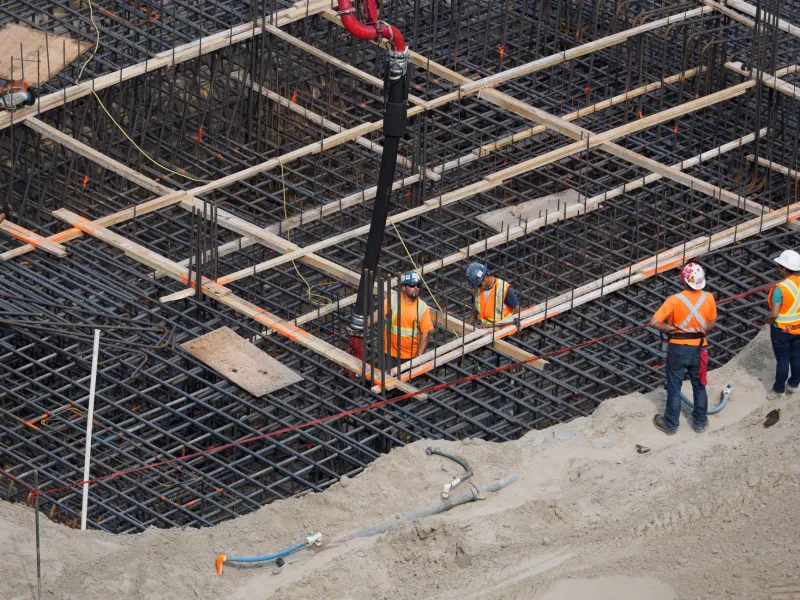
Photo: Timothy A. Gonsalves, CC BY-SA 4.0, via Wikimedia Commons
When the Nearest Electrician Is 90 Miles Away
In Harlan County, Kentucky, a homeowner with a failed electrical panel might wait two to three weeks for a licensed electrician to drive in from Lexington or Knoxville. In the Nebraska Sandhills, a broken HVAC unit in January isn't a repair call — it's an emergency that can take days to resolve because the nearest qualified technician is hours away.
This isn't a story about people being picky. It's about a structural gap that's getting wider every year, and rural communities are caught in the middle of it.
The skilled trades shortage is well-documented at the national level — the construction and building trades alone are projected to need hundreds of thousands of new workers over the next decade. But the geographic distribution of that shortage is wildly uneven. Urban and suburban markets are tight. Rural markets are in crisis.
Why Rural Areas Got Left Behind
The trades training pipeline in the United States has always been concentrated in population centers. Union halls, community college vocational programs, and registered apprenticeship sponsors tend to cluster where the density of employers — and therefore the density of training hours — makes programs financially viable.
For a small town of 4,000 people in rural Montana or Mississippi, there simply isn't the employer base to sustain a formal apprenticeship cohort. The local HVAC shop might have two or three technicians total. The electrical contractor might be a one-person operation. Neither has the capacity to run a structured multi-year apprenticeship alongside their actual work.
The result is a vicious cycle: no training infrastructure means no new workers entering the local pipeline. No new workers means the existing workforce ages out without replacement. An aging workforce means longer wait times, higher costs, and eventually, no local service at all.
According to data from the National Rural Electric Cooperative Association, nearly 40 percent of rural electric co-ops report difficulty recruiting qualified lineworkers and electricians — and that figure has climbed steadily for the past decade.
The Businesses Feeling It First
It's not just homeowners who suffer. Small businesses in rural areas — restaurants, farms, light manufacturers, retail operations — depend on functional plumbing, reliable electrical systems, and working climate control as much as anyone.
Terry Hobbs owns a grain processing facility in central Kansas. Last spring, an electrical fault took one of his conveyor systems offline during harvest season. The repair bill wasn't the problem — the wait was.
"Closest commercial electrician with availability was in Wichita, four hours round trip," Hobbs says. "We were down for six days waiting on a part and a schedule opening. That cost me more than the repair itself."
For agricultural operations where timing is everything, that kind of delay has real economic consequences. And it's a scenario playing out across rural America in dozens of industries.
What Some Communities Are Actually Doing About It
The good news — and there is good news — is that a handful of states and local organizations are piloting genuinely creative solutions.
Mobile Training Units
North Dakota's Department of Career and Technical Education launched a mobile trades training program that brings equipment and instruction directly to rural high schools and community centers. The unit rotates through a circuit of smaller towns on a quarterly schedule, offering introductory coursework in electrical, plumbing, and HVAC fundamentals.
It's not a full apprenticeship replacement, but it seeds interest and builds foundational competency in communities that otherwise have zero exposure to trades training.
Remote Mentorship Models
Some registered apprenticeship programs are experimenting with hybrid structures that pair rural apprentices with urban journeyman mentors via video check-ins and digital documentation tools. The apprentice works under a local employer sponsor — even a small one — while receiving structured curriculum guidance and assessment from a remote mentor who satisfies the journeyman oversight requirement.
The model is still being refined, and state licensing boards vary in how they treat remotely supervised hours, but early results in states like Montana and Maine are encouraging.
Regional Consortium Programs
In parts of rural Appalachia, neighboring counties are pooling resources to co-sponsor apprenticeship cohorts that no single county could sustain alone. A consortium of four or five small counties can collectively generate enough employer partners and apprenticeship slots to make a program viable, then share the administrative burden across participating workforce development offices.
The Upside Nobody Talks About Enough
Here's the flip side of the rural trades story that often gets lost in the crisis narrative: for someone willing to plant roots in a smaller community, the opportunity is extraordinary.
A licensed plumber or electrician in a rural market with limited competition isn't just employed — they're essentially essential infrastructure. Service calls that might be commoditized in a city become premium, high-loyalty relationships in a small town. A reputation built over five years in a rural community is worth more than any marketing budget.
Jessica Tran completed her HVAC apprenticeship through a community college program in Fargo, North Dakota, and deliberately chose to set up her own shop in a small town of about 8,000 people rather than stay in the metro.
"I knew every HVAC tech in the city was fighting for the same commercial contracts," she says. "Out here, I'm the HVAC person. I have 600 regular residential customers and I'm booked four to six weeks out. I built a client base in two years that would have taken ten in Fargo."
That dynamic — less competition, faster client base development, stronger community loyalty — is a genuine competitive advantage that rural apprentices can leverage if they're willing to look beyond the population centers.
What Needs to Happen at Scale
Individual innovation is encouraging, but the rural trades gap won't close without structural change. A few priorities stand out.
First, apprenticeship program registration requirements need rural-specific flexibility. Requiring the same cohort sizes and supervision ratios in a county of 5,000 that apply in Chicago makes no practical sense.
Second, rural employer sponsors need financial support. A small HVAC shop taking on an apprentice is absorbing real costs — lower productivity, training time, administrative burden. Targeted tax credits or wage subsidies for rural sponsors could change the math significantly.
Third, rural communities themselves need to see trades careers as a viable and respected path — not a consolation prize. That's a cultural shift, and it starts with schools, parents, and local leaders telling a different story about what building a career with your hands can actually look like.
Platforms like Apprent-E can help bridge that gap by connecting rural job seekers with apprenticeship opportunities they might not know exist — and helping rural employers find motivated candidates who are ready to learn. The pipeline problem is real, but it's not permanent. The workers exist. The need exists. What's missing, mostly, is the connection.