Who You Know Beats What You Post: Cracking the Trade Industry's Invisible Job Market

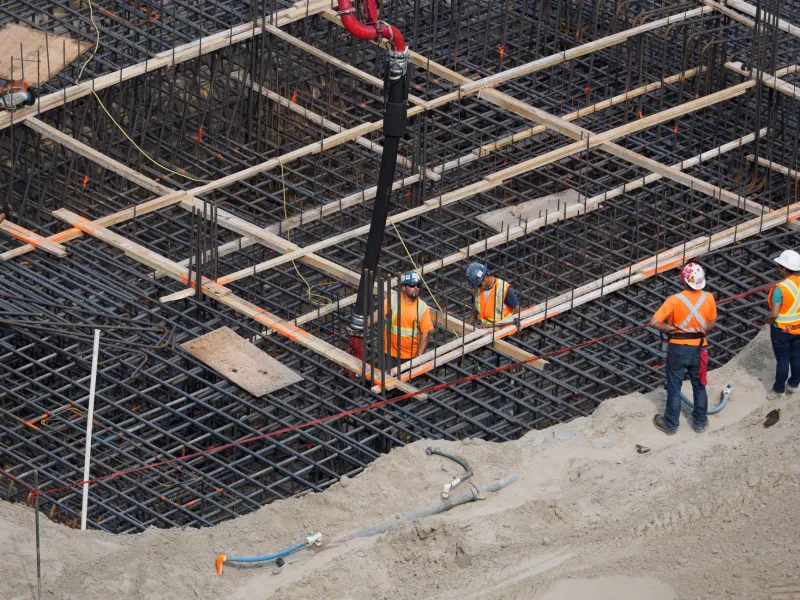
Photo: National Science Foundation, Public domain, via Wikimedia Commons
If you've spent hours scrolling through job boards looking for an electrician apprenticeship or a plumbing position, you've probably noticed something frustrating: the listings are sparse, the postings are vague, and half of them seem to be months old. Here's a truth that nobody in the career advice world talks about enough — for skilled trades, the online job market is basically the tip of the iceberg. The real action is happening somewhere you can't Google.
Studies and industry surveys consistently suggest that somewhere around 70 to 80 percent of trade industry openings are filled through informal channels. Word of mouth. A foreman who knows a guy. A retired electrician who vouches for his neighbor's kid. A text message between two contractors at a supply house. This isn't a glitch in the system — it's how the system was designed, even if nobody sat down and designed it that way.
Why Contractors Don't Bother Posting
To understand why so many jobs stay off the boards, you have to think like a small contractor. Most trade businesses aren't massive corporations with HR departments. They're a crew of five, maybe fifteen people. When they need someone, the owner isn't drafting a job description and setting up an applicant tracking system. They're picking up the phone.
Posting a job online opens the floodgates. You get resumes from people with no experience, people who live four states away, and people who applied to every single listing on the page without reading a word of it. Vetting strangers is time-consuming, and in a trade environment where trust and reliability are everything, a cold application carries very little weight.
A recommendation from someone already in the network? That's a different story. When a journeyman tells his boss "my buddy just finished his pre-apprenticeship and he's solid," that's a real endorsement with real accountability behind it. The boss knows if the hire goes sideways, the person who vouched for them hears about it. That built-in accountability is worth more than any resume.
The Relationship Economy of the Trades
Skilled trades run on what you might call a relationship economy. Reputation travels fast in these circles — and so do opportunities. Supply houses, union halls, job sites, and trade schools are all informal clearinghouses for information about who's hiring, who just landed a big contract, and which crew is short-handed going into a busy season.
This is actually great news if you're willing to show up. Unlike the corporate world, where networking can feel like a performance sport full of awkward LinkedIn messages and forced coffee chats, networking in the trades tends to be more organic. It happens at the workbench, at the parts counter, at a local JATAC event, or in a continuing education class at a community college.
Showing up consistently — and being someone people actually want to work with — is the whole strategy. It sounds simple because it is. But it requires real effort and real time.
Practical Ways to Tap Into the Hidden Pipeline
So how do you actually break in if you're starting from scratch? Here are some approaches that genuinely move the needle.
Get into a formal apprenticeship program. This is the single most powerful move you can make. Registered apprenticeship programs — through union halls like IBEW for electricians or UA for plumbers — plug you directly into an established network the moment you're accepted. You're not just getting training; you're getting access to decades of relationships.
Hang out where tradespeople hang out. Your local independent hardware store, electrical supply house, or plumbing supply counter is where contractors and journeymen grab materials and shoot the breeze. Be a regular. Be curious. Ask questions without being pushy. People remember the eager apprentice who asked smart questions more than they remember the perfect resume.
Volunteer your labor strategically. Habitat for Humanity builds, community fix-it days, and local nonprofit renovation projects are full of working tradespeople. You'll learn skills and build relationships at the same time. Even a weekend of swinging a hammer next to a licensed contractor is worth more than a week of job board browsing.
Talk to your instructors. If you're in a pre-apprenticeship program, a vocational school, or a community college trade program, your instructors are almost certainly connected to local contractors. They've been placing students in jobs for years. Tell them you're serious and ask who they'd recommend you reach out to.
Use social media — but locally. Facebook groups for local contractors, neighborhood apps like Nextdoor, and local trade association pages are where smaller contractors occasionally post openings or ask for referrals. These aren't the big national job boards; they're community-level conversations that fly under the radar.
What This Means for Your Job Search Mindset
The hidden job market in skilled trades isn't a barrier — it's actually an equalizer. You don't need a polished LinkedIn profile, a four-year degree, or a professionally formatted resume to break into it. You need to be present, reliable, and genuinely interested in the work.
In a lot of ways, the informal nature of trade hiring is what makes it accessible. A contractor who's been burned by a bad hire from a job board is often more willing to take a chance on someone a trusted colleague recommends — even if that person is brand new to the field — than to roll the dice on another anonymous applicant.
The trades reward people who are willing to put in the face time. Show up to the union hall meeting. Introduce yourself at the trade show. Help out on a weekend project. These aren't just nice things to do — they're how careers in the skilled trades actually get started.
At Apprent-E, we believe that building your future with your hands starts with building the relationships that open doors. The best opportunities aren't waiting on a job board. They're waiting for you to show up.